


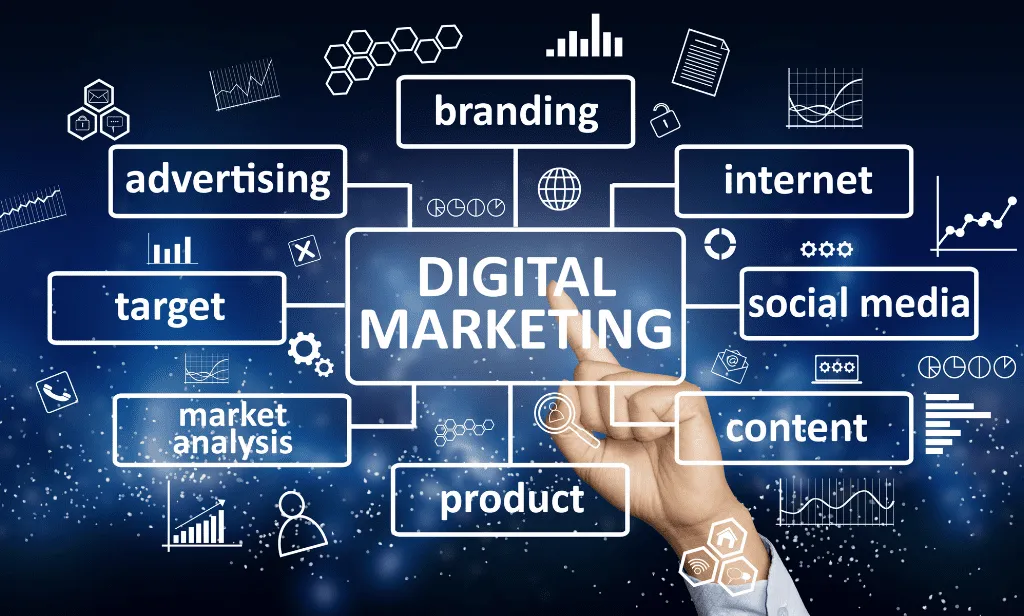
The digital marketing landscape has reached a point of maturity where the novelty of new technology has been replaced by the necessity of strategic integration. In 2026, the industry is no longer characterized by the rapid adoption of standalone tools but by the refinement of ecosystems that blend artificial intelligence, human insight, and a renewed commitment to privacy. Businesses that once experimented with AI are now operating within frameworks where automation acts as an execution layer, allowing human teams to focus on high-level narrative and trust-building.
The Shift to Generative Engine Optimization
Search behavior has fundamentally changed. Users are increasingly turning to conversational interfaces, AI-powered search assistants, and LLM-driven discovery platforms to find answers rather than browsing through traditional search results. This transition has shifted the primary goal of SEO from merely ranking for keywords to becoming an authoritative source that AI models cite.
Generative Engine Optimization has become the new standard for visibility. Instead of chasing high-volume keywords, brands are now focused on entity authority and structured data. By providing clear, concise, and highly factual information on their websites, companies increase their chances of being synthesized into AI-generated answers. This requires a shift in content architecture:
-
Answer-First Formatting: Creating clear, 40 to 60-word summaries at the beginning of content sections to make information easily extractable by AI.
-
Structured Data Markup: Using schema to explicitly define brand founders, product details, and organizational information, which helps machines understand the context and reliability of the brand.
-
Entity Building: Ensuring that brand information is consistent across all digital touchpoints, including professional networks and industry databases, to build a verifiable digital footprint.
AI Agents as Operational Partners
In 2026, AI is no longer just a productivity plugin; it is an active participant in marketing workflows. Advanced teams have deployed specialized AI agents that handle complex, multi-step tasks that were previously manual. This shift has redefined the role of the marketer from a tactical implementer to a strategist who manages and audits agentic outputs.
The modern workflow follows a clear pattern: a human defines the strategic objective, an AI agent generates multiple creative variations and micro-segmented targets, and the system monitors performance in real-time to optimize outcomes. While this automation yields significant efficiency—often reducing content production time by several hours—it emphasizes the importance of human oversight. Content that feels purely robotic or generic is now easily ignored by audiences who are increasingly sensitive to authentic engagement. Consequently, human-led strategy, voice, and unique perspectives serve as the final filter for all AI-assisted campaigns.
The Privacy-First Marketing Mandate
Data privacy has evolved from a regulatory checkbox into a central pillar of marketing strategy. With the tightening of global data protection laws and the increasing restriction of third-party cookies, companies are moving toward a first-party data model. This is not merely a defensive posture but a competitive advantage.
By cultivating direct relationships with consumers and obtaining explicit consent, brands can feed high-quality, reliable data into their AI models. This creates a virtuous cycle where better data leads to more accurate AI-driven personalization, which in turn fosters deeper customer trust. Businesses that rely on non-consented or poor-quality data are increasingly seeing their AI models deliver hallucinations or irrelevant results, which negatively impacts conversion. Transparency has become a primary selling point, and brands that clearly communicate how they handle data are finding that consumers are more willing to engage with them.
Community-Centric Engagement Strategies
As social media platforms continue to face algorithmic volatility and user fatigue, there is a visible move toward community-first environments. Rather than chasing viral reach, successful brands are investing in gated or semi-private communities where they can facilitate genuine conversations. This strategy bypasses the unpredictability of social media feeds by placing the brand at the center of a curated ecosystem.
Founder-led branding has also become a powerful tool in this space. By documenting the behind-the-scenes journey, leaders are building personal authority that creates a halo effect around their products. This human-centered approach creates a barrier to entry for competitors who rely solely on mass-market advertising, as trust is far harder to replicate than a generic marketing campaign.
The Integration of Behavioral Economics
Modern marketing success is as much about understanding psychology as it is about mastering data. In 2026, the most effective campaigns use behavioral economic principles to nudge users through the decision-making process. By understanding how the human brain processes loss and gain, marketers can refine their messaging to be more impactful.
-
Framing and Loss Aversion: Strategically highlighting what a user stands to lose by failing to act, which often triggers a more decisive response than focusing exclusively on benefits.
-
Social Proof and Validation: Using community consensus and expert endorsements to reduce the perceived risk of a new purchase.
-
Micro-Segmented Personalization: Using behavioral data to deliver specific offers that resonate with an individual’s current stage of the journey, thereby reducing cognitive load for the customer.
The Future of Creative Strategy
The creative component of marketing remains the single most important lever for performance. While AI can scale the volume of ad variations, it cannot replace the strategic vision required to craft a compelling brand story. The winning brands of 2026 are those that use AI to rapidly test hundreds of creative iterations while maintaining a strict adherence to their unique brand identity.
Distribution has also become a critical part of the creative process. Content is no longer published in hopes of discovery; it is systematically distributed across channels that align with where the specific audience spends their time. Whether through short-form video, interactive storytelling, or expert-led commentary, the focus is on providing value that is worth a user’s attention in an increasingly noisy digital environment.
FAQ Section
How should a business define its brand voice in the age of AI content?
Your brand voice is a strategic asset that should be documented in a central style guide. It should focus on your unique perspective, industry expertise, and personal values. When using AI, use your documented voice as a prompt constraint to ensure that all output maintains the same tone and professional standard as your human-created work.
Are traditional search engines becoming obsolete in favor of AI discovery?
Traditional search engines are not disappearing, but their role is changing. They are evolving into hybrid platforms where AI-generated answers and traditional search results coexist. Your strategy should shift to accommodate both by ensuring your content is optimized for AI extraction while remaining high-quality enough to perform well in organic search rankings.
What is the most effective way to start a first-party data strategy?
Begin by creating a value exchange. Offer something of genuine utility, such as exclusive insights, tools, or community access, in return for user data. Once you have a direct connection with your audience, prioritize building a central database that stores this data in a secure, compliant, and accessible manner.
How can a small business compete with larger brands using these complex technologies?
Small businesses have the advantage of agility. They do not need to overhaul their entire operation. Focus on one area—such as improving your website for AI search or launching a small, community-driven social initiative—and master that before layering on more complexity. Authenticity often performs better than scale for smaller brands.
Why does human content outperform AI content in long-term traffic studies?
Human-created content often contains unique perspectives, personal experiences, and nuanced insights that AI currently struggles to synthesize authentically. Readers prioritize these human elements because they establish authority and trust, which are the primary drivers of long-term engagement and repeat visits.
How do I know if my marketing team is over-relying on AI?
If your marketing results show high volume but low engagement, or if your brand voice feels generic and indistinguishable from competitors, you are likely over-relying on automated generation. Audit your content by removing the AI-generated parts and assessing whether the core strategy and unique insights remain intact. If they do not, you need to increase human input in the strategic and creative planning phases.
What role will virtual reality or augmented reality play in 2026 digital marketing?
While still in a growth phase, these technologies are moving from gimmicks to utility. Brands are beginning to use them for product visualization and immersive storytelling, particularly in retail and home improvement sectors, allowing consumers to experience products in a digital or mixed-reality environment before they commit to a purchase.








Comments are closed